
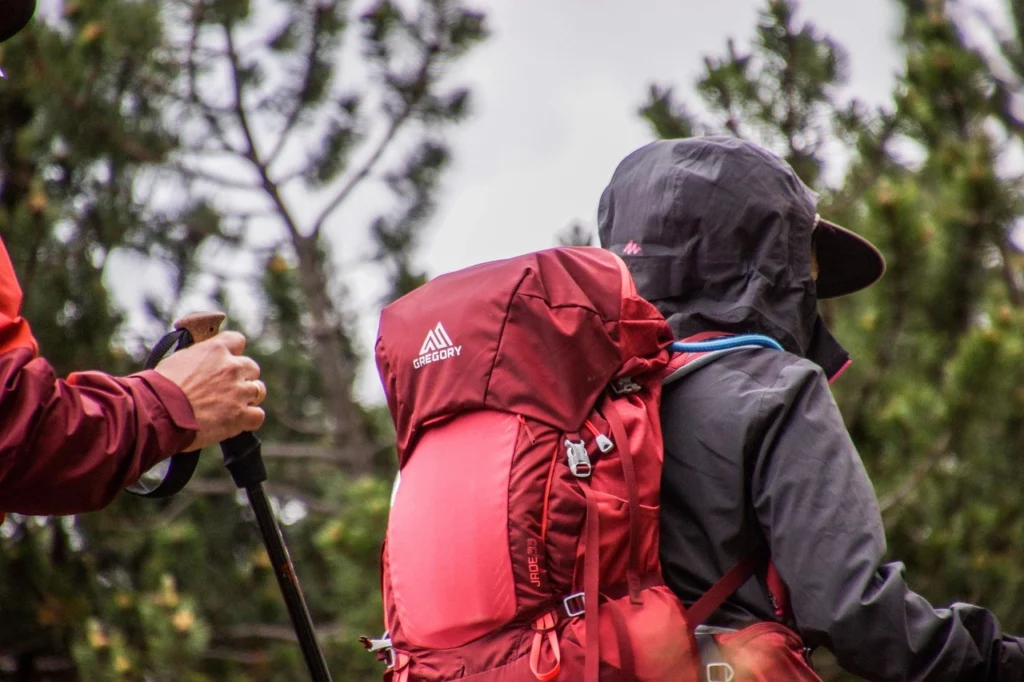
When you are standing at the base of a mountain, looking up at a trail that disappears into the clouds, your equipment is more than just “stuff”—it is your lifeline. Among the various pieces of gear a hiker carries, the backpack (or carrier) is arguably the most critical. It houses your shelter, your food, your water, and your safety kit. But more importantly, the way it carries that weight determines whether your journey will be a triumph or a grueling test of physical pain.
In this guide, we dive deep into why technical backpacks, like the vibrant red model featured in our latest collection, are essential for serious adventurers. We will explore the anatomy of a great pack, the importance of visibility, and how to pack for maximum efficiency.
1. The Science of Load Distribution
The human body is not naturally designed to carry 15–20kg on its back for ten hours a day. This is where high-end technical backpacks prove their worth. A “dummy” pack might look the part, but a professional carrier is an engineered tool.
The primary goal of a technical backpack is to shift approximately 80% of the weight from your shoulders to your hips. Your legs are the strongest muscles in your body; your shoulders and spine are vulnerable. A high-quality internal frame, combined with a padded hip belt, creates a structural cage that stabilizes the load. When you see a hiker moving with agility on a steep incline, it is because their pack is moving with them, not against them.
2. Why Color Matters: The Case for “Safety Red”
While many hikers opt for earthy tones like forest green or charcoal to blend in with nature, there is a strong argument for choosing high-visibility colors like the red pack shown in our featured image.
In the world of mountaineering, visibility equals safety. Should you ever find yourself in an emergency situation—whether lost in a dense fog or needing assistance in a vast valley—a bright red backpack acts as a natural signaling device. It contrasts sharply against green forests, grey rocks, and white snow, making it significantly easier for search and rescue teams or fellow hikers to spot you from a distance.
3. Breathability and The “Back-Sweat” Problem
One of the most common complaints among long-distance trekkers is the accumulation of heat and moisture between their back and the pack. Modern technical carriers solve this through advanced suspension systems.
Look for packs that feature a “suspended mesh” back panel. This creates a physical gap between the bag’s main compartment and your body, allowing air to circulate freely. Not only does this keep you cooler, but it also prevents the chafing and skin irritation that occurs when a wet shirt rubs against your skin for miles on end.
4. Features That Make a Difference
When you are on the trail, convenience is king. Small design choices can have a massive impact on your energy levels:
- Trekking Pole Attachments: As seen in the image, trekking poles are essential for stability. A good pack should have “on-the-go” loops that allow you to stow your poles without taking the pack off.
- Hydration Compatibility: Stopping to take a bottle out of your side pocket every 20 minutes breaks your rhythm. Modern packs include a sleeve for a hydration bladder, allowing you to sip water through a tube while walking.
- Multiple Access Points: A “top-loading only” bag is a nightmare when you need your rain jacket buried at the bottom. Look for bags with J-zips or bottom compartments that allow you to access gear from different angles.
5. How to Pack Like a Pro (The ABCs)
Owning a great bag is only half the battle; knowing how to pack it is the other. Follow the ABC rule:
- A – Accessibility: Items you need during the day (map, snacks, rain shell, first aid) should be in the top lid or outer pockets.
- B – Balance: The heaviest items (tent poles, stove, water) should be placed close to your back, centered between your shoulder blades. This keeps the center of gravity stable.
- C – Compression: Use the straps on the side of the bag to pull the load tight. A “floppy” bag will shift as you walk, throwing you off balance on technical terrain.
6. Maintenance: Making Your Gear Last a Lifetime
A professional-grade hiking backpack is an investment. To ensure it lasts for decades of adventure, never store it while it is damp. After every trek, wipe it down with a damp cloth to remove salt from your sweat, which can corrode zippers over time. Store it in a cool, dry place away from direct sunlight to prevent UV damage to the nylon fibers.
Conclusion
The red carrier in our visual isn’t just a fashion statement—it’s a symbol of readiness. Whether you are a weekend warrior tackling a local trail or an aspiring alpinist preparing for a multi-day expedition, the right backpack is your most loyal companion. It protects your gear, saves your back, and ensures that the only thing you have to focus on is the breathtaking view at the summit.
Ready to upgrade your adventure? Explore our new range of technical carriers designed for the modern explorer. From ultralight daypacks to heavy-duty expedition rucksacks, we have the perfect fit for your next journey.

Comments